Zapata on Horseback, Now in the Center of Cuernavaca
It weighs more than five tons and arrived at this plaza in August two thousand twenty-five, after two moves.
Location: The Plaza de Armas, Historic Cuernavaca.
To reach this plaza, the monument had to cross the city twice. It was installed in nineteen seventy-nine at the entrance to Cuernavaca, beside the federal highway, in the Buena Vista neighborhood. There it greeted those arriving from Mexico City. In two thousand nineteen it was moved to the so-called Paso Exprés, at the intersection with Vicente Guerrero Avenue, where it was left neglected. And in August two thousand twenty-five it was brought here, to the Historic Center.
The last move was a delicate operation. The sculpture was dismantled on a Friday, the first of August, in the afternoon, and it was in place by the early hours of Tuesday, the fifth of August. The bronze figure weighs a little over five tons and measures about five and a half meters high by nine and a half meters long. Its pedestal is seven meters long, four meters wide, and three meters high. Governor Margarita González Saravia pushed for the relocation. The government explained that this strengthens Zapata’s identity and memory in the state. It added that here visitors and tourists can admire it in the heart of the Historic Center.
The sculptors are Carlos Kunte and Estela Ubando. It is an equestrian monument, that is, with the rider mounted on his horse, as is customary for honoring military leaders. Zapata was one of them, but his fame comes from something else: the land.
Emiliano Zapata was born in Anenecuilco, Morelos, on the eighth of August, eighteen seventy-nine. At that time, the sugar haciendas had taken over much of the land belonging to the state’s villages. Zapata led the peasants who wanted to recover it. In nineteen eleven he proclaimed the Plan de Ayala, which demanded that the villages’ lands be returned to them. His motto was “Land and liberty.” He died in nineteen nineteen, in an ambush at the Chinameca hacienda, also in Morelos.
The plaza that now welcomes him is called Plaza de Armas General Emiliano Zapata Salazar. It was almost completely remodeled in two thousand sixteen. Across from it is the Government Palace, and a few blocks away is the Palace of Cortés, where the visit continues.
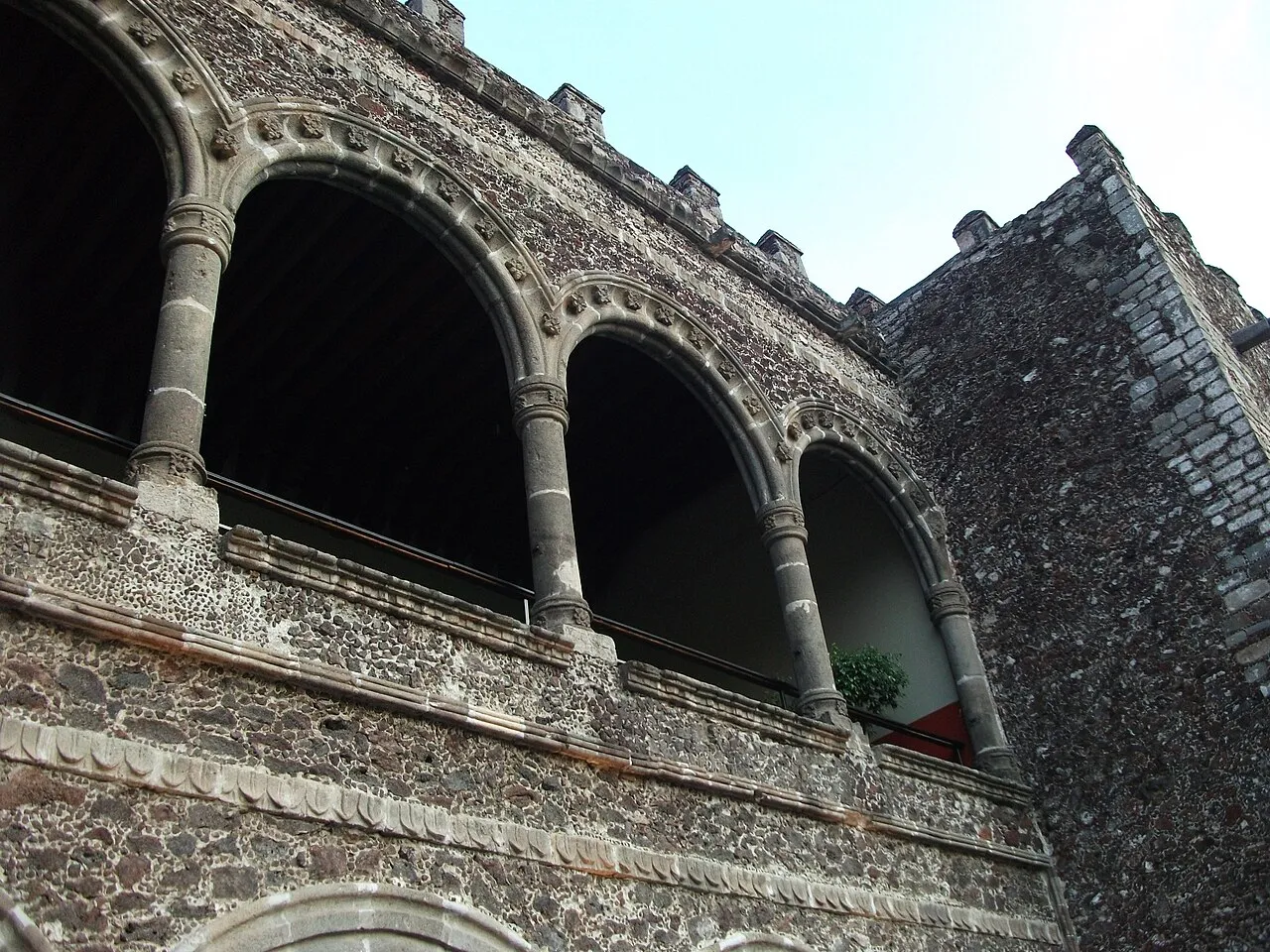
There, Diego Rivera painted Zapata in nineteen thirty, just eleven years after his death. He did not dress him as a charro with silver ornaments, as he appears in many photographs. He painted him as a humble peasant, in a white cotton shirt and trousers and huaraches. Between the bronze sculpture and the mural there is almost a century of distance, but the message is similar: the hero is a person of the countryside.
Before moving on, compare the size of the rider with the people crossing the plaza. A sculpture of this size demands distance, and the open plaza gives it that. A monument is not just a work of art. It is also a decision about what a city remembers and where it wants to remember it.
This monument is a first sign of the layer of power: who rules, who remembers, and what is celebrated in a city.
Listen to the full audio guide for Historic Cuernavaca
72-hour pass for US$10, no subscription.