Chichén Itzá Archaeological Zone: audio guide for your visit
72-hour pass for US$14, no subscription. 2 stops to listen to for free, no sign-up.
What to see: The essentials
11 stops in about 2 h 15 min, in the order you walk.
- Chichén Itzá de un vistazo
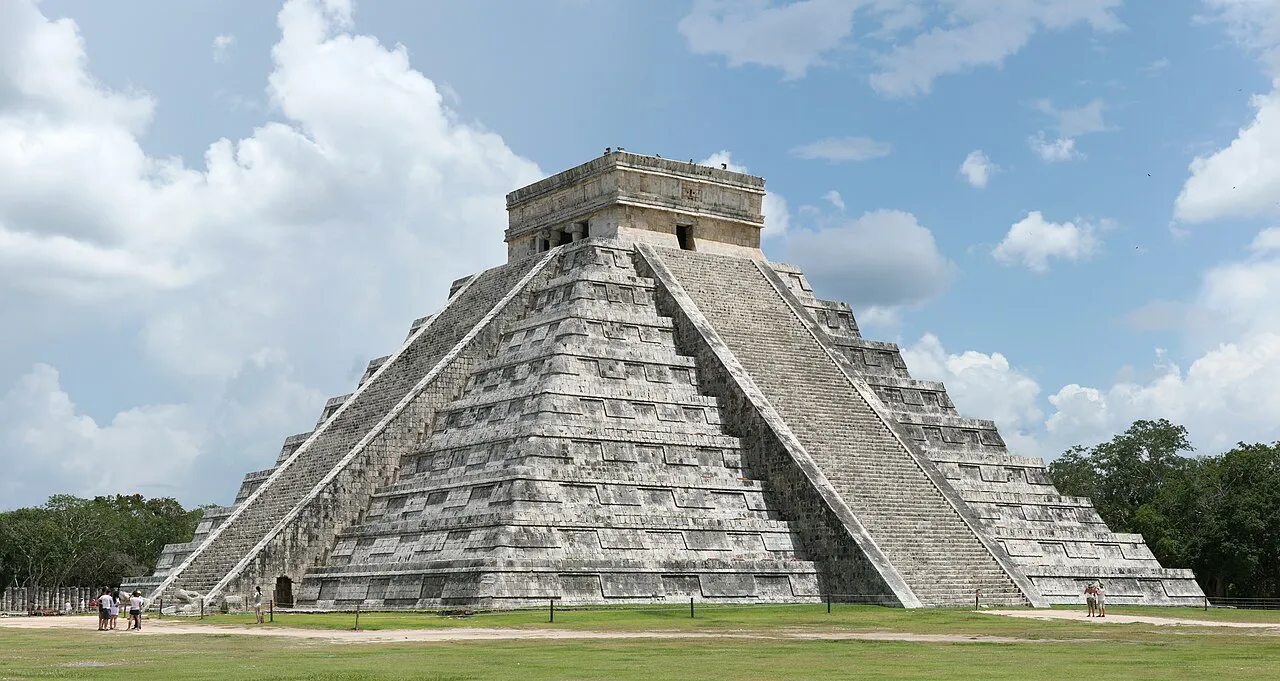
- El Castillo (Pirámide de Kukulcán)
- El descenso de Kukulcán y el eco del quetzal
- El Gran Juego de Pelota
- Los paneles de la decapitación y los anillos
- El Cenote Sagrado y su baño de vapor
- Templo de los Guerreros y el templo del Chac Mool que guarda
- La Gran Plaza de las Mil Columnas
- El Caracol y el templo anexo
- El Edificio de Las Monjas
- Abandono, redescubrimiento y memoria
Tours
Pick one for the time you have. The audio guide takes you one stop at a time.
- The essentials 2 h 15 min · 11 stops
- Half a day 3 h 15 min · 22 stops
- Full tour 4 h 15 min · 29 stops
- Astronomy and calendar 1 h 30 min · 8 stops
- Ball game and sacrifice 1 h 10 min · 8 stops
- Sacred water 1 h 35 min · 7 stops
- Old Chichén (guided visit) 1 h 15 min · 4 stops
Before you go
Getting there
Chichén Itzá is in Yucatán, about 120 km from Mérida (almost 2 hours), 45 minutes from Valladolid and 2.5 to 3 hours from Cancún.
- By car: take the Mérida–Cancún toll road; leave at Chichén Itzá and follow the signs. The car park is next to the entrance.
- By bus: companies such as ADO run from Mérida, Valladolid and Cancún to the site; check return times, because the last ones leave early.
- By tour: practical, but they arrive mid-morning and leave early.
If you can, stay in Valladolid or Pisté: you arrive at opening time, before the heat and the tours.
Hours and tickets
The site is open every day, normally from 8:00 to 17:00, with last entry around 16:00. Tickets are sold at the ticket office or online and include a federal part (INAH) and a state part (Yucatán), so sometimes they are paid separately.
On Sundays admission is free for Mexican nationals and foreign residents, but it gets very crowded. Next to the entrance is the Visitor Centre, with a museum, restrooms, a shop and a restaurant; check whether the museum has a separate entrance.
Prices change every year: check the official INAH website.
When to go
Arrive at 8:00: the air is cooler, the light is soft for photos and the tour buses have not yet arrived. From 10:30 the site fills up and the heat builds.
The spring equinox (around 20 and 21 March) and the autumn one (22 and 23 September) are famous for the serpent-shaped shadow on the staircase of El Castillo, but the crowds are huge. Weekdays in January and February are usually the most pleasant.
In the rainy season (June to October) there are afternoon downpours and the air gets very humid.
What to bring
Plenty of water, a hat, sunscreen and sunglasses. Yucatán is hot and humid almost all year, and the site has little shade. Light clothing and comfortable closed shoes; in the rainy season, a light rain jacket.
Mosquito repellent, especially in the morning.
Download the audio before you go in: the signal is patchy in the jungle. Bring some cash for restrooms and purchases: not every stall takes cards.
Facilities
The Visitor Centre next to the entrance has restrooms, a shop, a restaurant and luggage storage or a cloakroom. Inside the site there are few restrooms and almost nowhere to eat, so use the facilities when you arrive.
There are craft stalls in several parts of the site; the mood is relaxed and bargaining is normal. Licensed guides also wait at the entrance: agree on the price before you start.
Accessibility
The site is flat and you walk on dirt and stone paths in direct sun. Distances are moderate: from the entrance to El Castillo is about 5 minutes on foot and the main area covers a couple of kilometres.
There are ramps at some entrances, but not every area suits wheelchairs and the paths get difficult after rain. Ask at the ticket office which route is open.
Site rules
Climbing El Castillo or any other structure is not allowed; respect the ropes. Drones, pets and speakers are not permitted, and tripods and professional photography need INAH permission. Do not litter or take stones or pottery.
You can clap in front of the staircase of El Castillo and listen to the echo, which resembles the call of the quetzal.
Tips
Follow the order of the app and leave the Observatory and the southern buildings for last: they are quieter.
- Clap in front of El Castillo and listen to the echo. They say that in the Great Ball Court a voice carries from one end to the other.
- If you are short on time, choose a short route in the app and spend the morning on the main sights.
- Nearby there are cenotes, such as Ik Kil, for a swim after the heat. Worth it.
- If you stay until evening, ask whether there is a light and sound show that day.
72-hour pass for US$14, no subscription. 2 stops to listen to for free, no sign-up.