Chapultepec Castle: audio guide for your visit
The emblematic viceregal fortress and imperial residence on Grasshopper Hill, witness to decisive moments in the history of the Republic.
72-hour pass for US$7, no subscription. 2 stops to listen to for free, no sign-up.
About the site
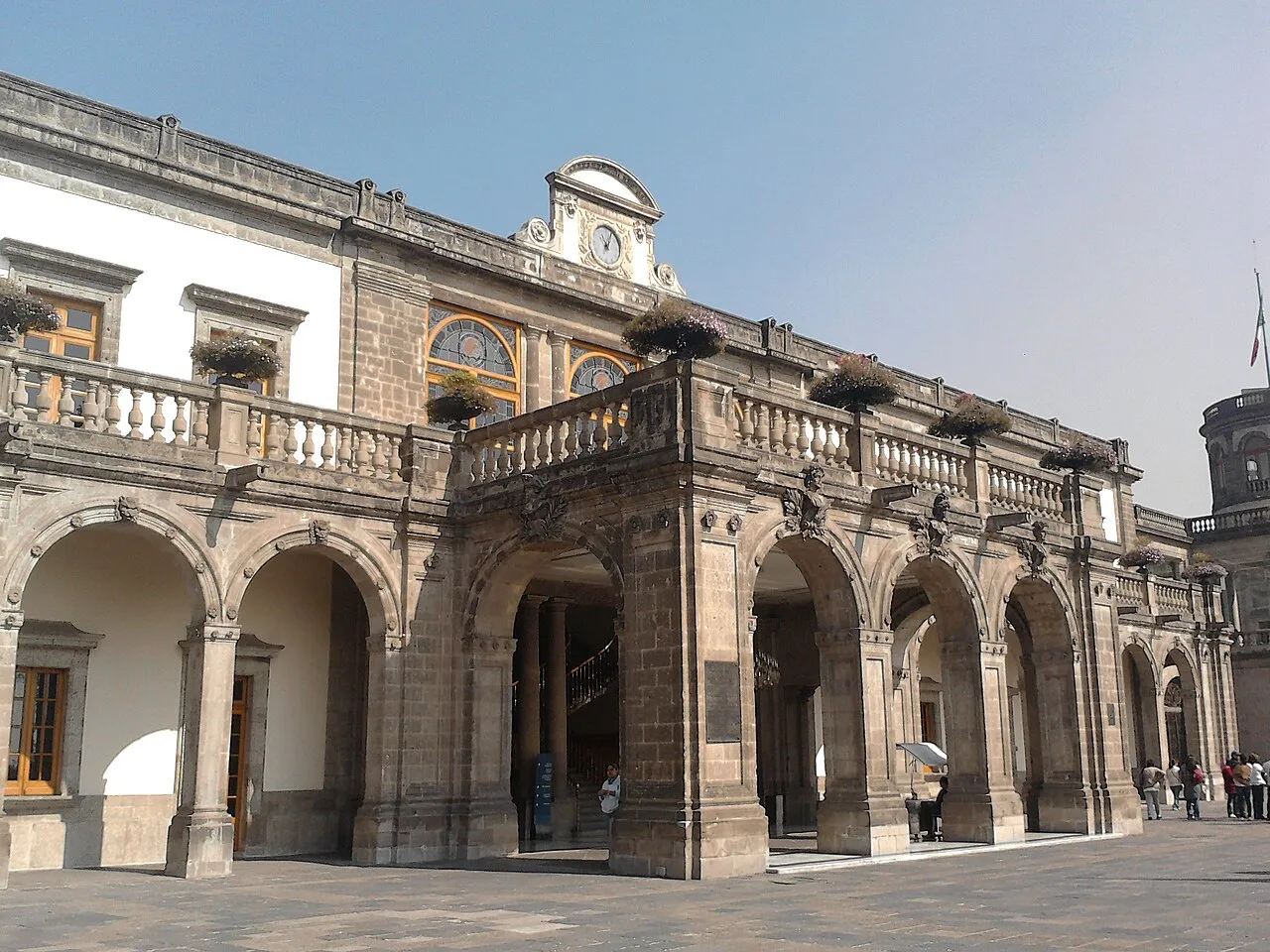
Chapultepec Castle stands on Grasshopper Hill in Chapultepec Park. Construction began in 1785, in viceregal times; it later served as a military academy and, between 1864 and 1867, as the residence of Emperor Maximilian and Empress Carlota. After that it was the home of Mexican presidents. Since 1944 it has housed the National Museum of History.
Inside, it feels like a house with many eras: the halls of the Alcázar with the carriages and the imperial rooms, and the history galleries with the murals on Independence and the Revolution. Outside, the terraces and lookouts open the view over the park and the city.
The visit here is shorter than at other museums, so tours are chosen by the time you have, and each work or corner leads to the next in the order you walk.
What to see: Express route
15 stops in about 1 h 25 min, in the order you walk.
- Chapultepec: the Hill of the Grasshopper and Its Springs Before it was a castle, this hill was a source of fresh water that kept the Mexica capital alive.
- The Entrance to the Castle and Its Viceregal Origins It was said that the viceroy who ordered this building raised wanted to make himself king; the documents tell a different story.
- The Cannon Courtyard and the Old Military College The esplanade where teenagers between thirteen and nineteen years old faced an artillery bombardment.
- Morelos and Iturbide: Two Paths to Independence One was a muleteer and priest, the other an officer in the king’s army; both were born in Valladolid, and their names became linked.
- Siqueiros: From the Porfiriato to the Revolution More than seventy-six meters of mural designed to be experienced by walking along it, not from a single spot, and painted with industrial materials.
- The Constitution of 1917 and González Camarena’s Mural In this mural, an eagle dictates the Constitution to Carranza: this is how González Camarena imagined the birth of the law of nineteen seventeen.
- The Carriage Hall of the Alcázar A Baroque state carriage made in Milan and an everyday coach that changed coats of arms when the government changed.
- Galería de Emplomados: las cinco diosas Around nineteen hundred, five goddesses made of glass and lead arrived from Paris to enclose a corridor of the Alcázar.
- The Dining Room and the Tea Room It is said that Maximilian ordered nearly five thousand pieces of silver for his table; here is what became of them.
- Carlota’s Bedroom The French furniture in this bedroom was believed to be Carlota’s, but the museum tells a different story.
- Bedrooms of Porfirio Díaz and Carmen Romero Rubio Porfirio Díaz did not live in the Castle all year round: he used it in the summer, for balls and receptions.
- Alcázar Garden Maximilian said that happiness was building castles with garden terraces, and this intimate garden was born from that idea.
- The Caballero Alto, Tower and First Observatory It looks like a medieval tower, but it was built in the eighteen forties and went on to become the first National Astronomical Observatory.
- Terrace and Memory of the Niños Héroes Every September 13, six names are remembered; historians separate what is documented from what legend added.
- East Terrace and the Paseo de la Reforma The capital’s most famous avenue was born to link this castle with the heart of the city.
Tours
Pick one for the time you have. The audio guide takes you one stop at a time.
- Express route 1 h 25 min · 15 stops
Fifteen stops with the Castle’s highlights: the climb up the hill, the Cannons Courtyard, the Siqueiros and González Camarena murals, Maximilian and Carlota’s Alcázar, Porfirio Díaz’s bedrooms, the garden and the terraces. You will walk about 1.5 km (0.9 miles), including the climb. With the full audio, add about 35 minutes. - Complete route 2 h 15 min · 30 stops
All thirty stops in the Castle, from the ramp to the terraces: the History Museum and its murals, every room of the Alcázar and the gardens. You will walk about 2 km (1.2 miles), including the climb. With the full audio, add more than an hour. - The Alcázar: Maximilian, Carlota and Porfirio 1 h 15 min · 16 stops
Sixteen stops through the imperial and presidential residence: the carriage hall, the Lions Staircase, the stained glass, the dining room, the bedrooms of Carlota, Maximilian and Porfirio Díaz, the presidential office, the garden and the Caballero Alto tower. For visitors who come for the house rather than the museum. - The History Museum 1 h 5 min · 14 stops
Fourteen stops through Mexican history in the former Military College: the conquest and New Spain, Hidalgo’s banner, Independence, the 1847 war, Juárez’s carriage and the murals by O’Gorman, Orozco, Siqueiros and González Camarena, up to the 1917 Constitution.
Zones
- Exteriors and Entrance Long before it was a castle, this hill already served as a place to observe the sun, live beside the lakes, and watch over the valley.
- Museum of History (former Military College) A building that was once a military school, an observatory and a residence now tells the story of Mexico as the National Museum of History.
- The Alcázar (Imperial and Presidential Residence) In the Alcázar, two eras lived side by side: the residence of Maximilian and Carlota, and the home of the presidents who came after.
- Terraces and Gardens High on the hill, the castle opens to the open air with intimate gardens, panoramic terraces, and a tower that once served as an observatory.
Before you go
Getting there
The castle stands at the top of Chapultepec Hill, inside Chapultepec Park. From the park entrance the walk up takes about 10 to 15 minutes.
- Chapultepec station (Line 1): about 10 minutes on foot to the park entrance, then the climb.
- Auditorio station (Line 7): about 20 minutes on foot through the park.
- By car: there are car parks around the park, and they fill up at weekends.
A small tourist train helps with the climb; ask for its schedule and fare on site. The climb is part of the visit: it has good views of the park and of Reforma.
Hours and tickets
The museum is open Tuesday to Sunday, normally from 9:00 to 17:00. It is closed on Mondays.
Sunday admission is free for Mexican nationals and foreign residents, and the museum limits daily entry: once the cap is reached (up to 10,000 people), it closes even early in the day. The rooms also have small capacity limits and your time inside is controlled.
To avoid being turned away, go on a weekday. Check current hours and prices on the INAH website.
When to go
The best time is a Tuesday or Wednesday at 9:00: short queues and nearly empty terraces. Avoid Sundays or arrive very early, because of the cap and the queues.
The climb is in full sun, so go up early if it is hot. In the rainy season (June to September) afternoons bring downpours and mist.
Allow an hour and a half for a quick visit and three hours to see the halls at ease.
What to bring and what to leave
Comfortable shoes for the climb and the marble and wooden floors. Water, a hat and sunscreen for the walk through the park, and a light sweater for the drafts on the terraces.
Large backpacks and bulky items go in the cloakroom, so carry only what you can hold. Download the audio before you leave: the signal is patchy in the halls.
Facilities
There are restrooms at the foot of the hill and inside the museum, a shop with books and reproductions, and a cloakroom. For food, the park has stalls and cafés, with quieter options around the lake. Bring water: the climb is long and in the sun.
Accessibility
Access is a long, steep ramp, with a small train to help you up. Inside there are areas with lifts and ramps, but parts of the historic building have steps and narrow passages.
Ask at the entrance which areas are open to wheelchairs and reduced mobility, and choose a short route in the app if you tire easily.
Site rules
Photos without flash for personal use; tripods are not allowed. Do not touch the furniture or walls: they are original and fragile. The rooms are visited in small groups, so keep moving with the flow and do not stop in doorways. Food, drink and large bags are not allowed inside.
Tips
The castle has been a viceroyal retreat, a military academy, an imperial and presidential residence, and is now a museum. Picture those layers as you walk.
- Climb slowly and look back: the view of the park and Reforma is the best introduction.
- The terraces and the Alcázar are the most photogenic, and look best in morning light.
- The story moves through the rooms from viceregal Mexico to the Revolution, so following the order helps.
- Save 20 minutes for the garden: it is quieter than the museum and few people use it.
Free stops to try
72-hour pass for US$7, no subscription. 2 stops to listen to for free, no sign-up.