Historic Centre of Mexico City: audio guide for your visit
72-hour pass for US$7, no subscription. 2 stops to listen to for free, no sign-up.
About the site
The Historic Centre has been the heart of Mexico City for centuries: Tenochtitlan stood here, the viceregal capital rose here, and the Zócalo, the Cathedral and the National Palace are still here. It is a UNESCO World Heritage Site.
This guide takes you through it on foot, from Bellas Artes to the Zócalo and on to the Templo Mayor and Santo Domingo, with fifty stops in order. Almost all of them are told from the street, so you can do it without going inside any museum.
You can take a walk of under two hours with the essentials or give it two days: one through the west of the Centro and another around the Zócalo and its surroundings. You will walk about 11 km (6.8 miles) in total, so wear comfortable shoes.
What to see: The essentials on foot
11 stops in about 1 h 40 min, in the order you walk.
- Palacio de Bellas Artes: The Theater That Took Thirty Years It was designed for the Centennial of nineteen ten and did not open until nineteen thirty-four, with a different style inside.
- Alameda Central: the Oldest Public Park in the Americas It is called Alameda after some poplars that did not survive, and the viceroy ordered it built in fifteen ninety-two.
- Hemicycle to Juárez: Carrara Marble for the Centennial Twelve marble columns form a semicircle dedicated to Benito Juárez, inaugurated during the Centennial celebrations of Independence.
- Palacio Postal: A Post Office Palace Still in Service It is an eclectic palace inaugurated in nineteen oh seven that still works as a post office today.
- Torre Latinoamericana, la Latino A steel tower raised on the soft ground of the ancient lake, still standing after three major earthquakes.
- House of Tiles: The Palace That Dressed in Puebla A viceregal house clad in tiles from Puebla, which has been a palace of counts, an elite club, and a restaurant.
- Madero Street: San Francisco, Plateros, and a Name from 1914 A street that was once San Francisco, then Plateros, and that since nineteen fourteen has carried the name Madero.
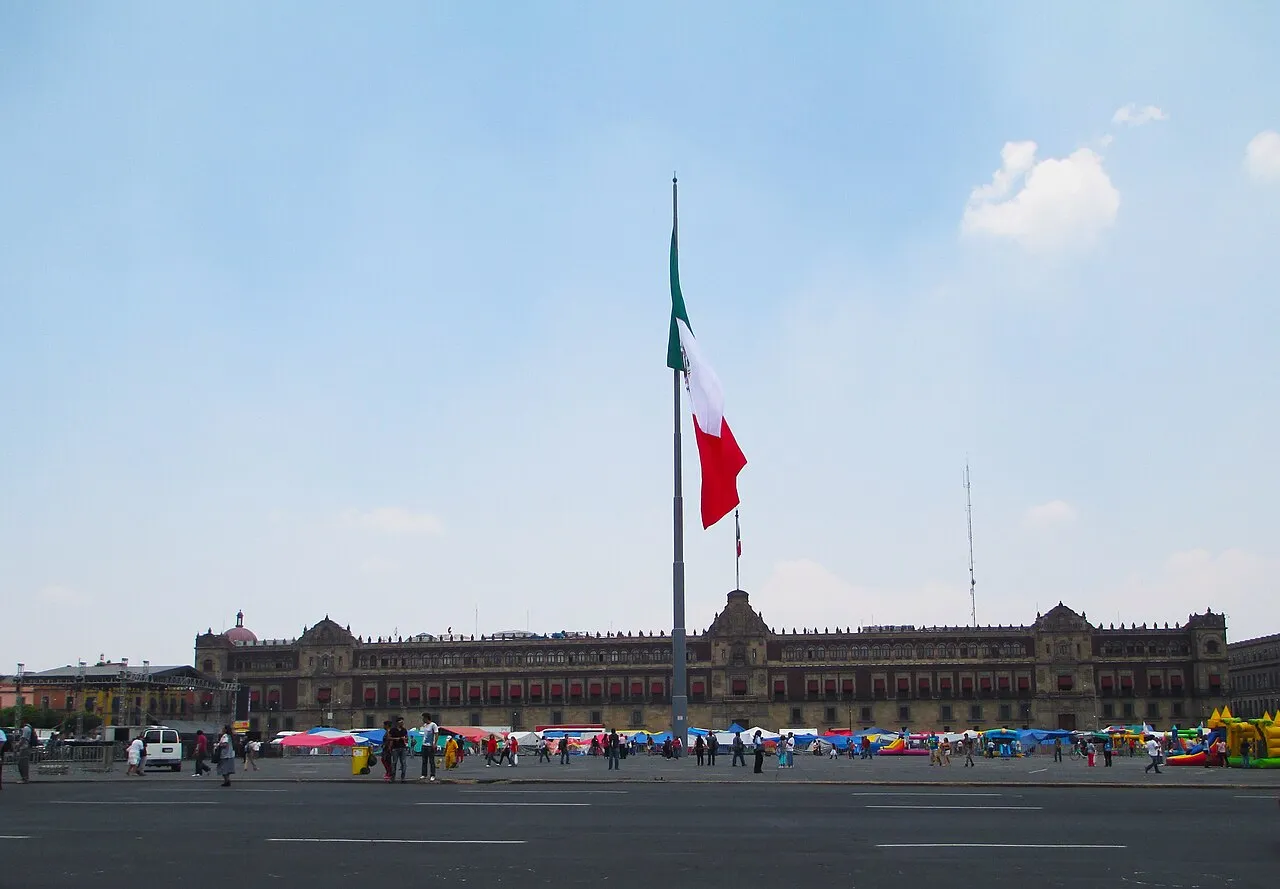
- Zócalo: the Plaza Named for a Base Without a Monument This plaza takes its name from a stone base that never ended up holding any monument.
- Metropolitan Cathedral: More Than Two Centuries on Sinking Ground It took nearly two hundred forty years to finish, and it is still under watch because the ground that holds it up is sinking.
- National Palace: Seat of Power Over the Houses of Moctezuma This building occupies the entire east side of the plaza and holds centuries of power, fire, and murals.
- Templo Mayor y su museo: el corazón de Tenochtitlan
Tours
Pick one for the time you have. The audio guide takes you one stop at a time.
- The essentials on foot 1 h 40 min · 11 stops
Eleven stops for the essentials without going inside any museum: Bellas Artes, the Alameda, the Hemiciclo a Juárez, the Postal Palace, the Latinoamericana Tower, the House of Tiles, Madero Street, the Zócalo, the Cathedral, the National Palace and the Templo Mayor ruins seen from the street. You will walk about 3 km (1.9 miles). With the full audio, add about 35 minutes. - Day 1: from Bellas Artes to the Zócalo 3 h 15 min · 24 stops
Twenty-four stops through the western Centro and Madero Street: Bellas Artes, the Alameda, Tolsá Plaza, the Latinoamericana Tower and Madero’s historic palaces and shops. You will walk about 5.5 km (3.4 miles). The time counts the stops from the street; if you go into museums such as Bellas Artes, MUNAL or the Diego Rivera Mural Museum, add 30 to 60 minutes for each. - Day 2: Zócalo, Templo Mayor and Santo Domingo 3 h 30 min · 26 stops
Twenty-six stops: the Zócalo, the Cathedral, the National Palace, the Templo Mayor, Moneda Street and the squares, schools and murals of Santo Domingo, up to Donceles Street. You will walk about 5 km (3.1 miles). The time counts the stops from the street; if you go into the Templo Mayor, the National Palace or San Ildefonso, add 45 to 90 minutes for each. - Both days, complete 6 h 45 min · 50 stops
All fifty stops in order, from Bellas Artes to Donceles Street. You will walk about 11 km (6.8 miles). On foot and without going into museums it takes almost seven hours, so it is best split over two days: the west on the first and the Zócalo on the second. - The great murals 4 h 30 min · 6 stops
Six stops to see the Centro’s most famous murals from the inside: the Palace of Fine Arts, the Diego Rivera Mural Museum, the National Palace, the Living Museum of Muralism at the SEP and San Ildefonso. The time includes going into each building; check opening hours and fees first, and bring ID for the National Palace. You will walk about 4 km (2.5 miles).
Zones
- Bellas Artes and the Alameda A white marble palace and the Alameda, the promenade where the city came out to stroll.
- Eje Central and Plaza Tolsá A bronze horse, a palace of engineers, and two towers that defied the soft ground.
- Madero Street A pedestrian street where palaces, churches, jewelry shops and time-honored candy stores live side by side.
- Zócalo, Metropolitan Cathedral and National Palace The largest square in the city and the buildings where much of the country’s history was decided.
- Templo Mayor and Moneda Street The great Mexica pyramid uncovered, and a street where coins were minted and books were printed.
- Santo Domingo, Murals and Colleges Squares of public scribes, Baroque colleges, murals, and streets of old books.
Before you go
Getting there
The route starts at the Palacio de Bellas Artes and heads down to the Zócalo along Madero street, a walk of about 1.5 kilometres.
- Bellas Artes station (Lines 2 and 8): you come out almost opposite the Palace.
- Zócalo/Tenochtitlan station (Line 2): the end of the route and a good way to head back.
- By car: the Centro has closed streets and expensive car parks. It is better to arrive by Metro, Metrobús or ride-hailing taxi.
Hours and tickets
Each place with an entrance fee has its own hours, and almost all museums close on Mondays. From Tuesday to Sunday, most open between 9:00 and 10:00 and close between 17:00 and 18:00.
- Palacio de Bellas Artes: museum and murals with paid entry; hours change with exhibitions and performances.
- Museo del Templo Mayor: normally Tuesday to Sunday, 9:00 to 17:00.
- Cathedral: open most days, though access is restricted during some Masses.
- Streets, plazas and facades can be seen at any hour.
Check hours and prices before you set out.
When to go
On weekday mornings the Centro is calmer. On Sundays there are more families on the streets and some museums are free for Mexican nationals and residents, but it is also busier.
The Zócalo is sometimes closed for concerts, fairs, marches or official events. If you see barriers, go around it along Madero street and come back later.
Starting at 10:00 balances the sun, the crowds and museum opening hours well.
What to bring
Very comfortable shoes: this is several hours of walking on cobblestones and uneven pavements. Water, a hat, sunscreen and a small bag you can carry in front of you.
If you want to go into the Cathedral, bring something to cover shoulders and knees. Download the audio before you set out.
Facilities
There are restrooms in the museums and in cafés. For a meal or a rest: Café de Tacuba, the Casa de los Azulejos (Sanborns) with its fountain courtyard, and the sweet shops on Madero street. If you want to see the Centro from above, the Torre Latinoamericana viewing deck is a few steps away.
Accessibility
Madero street is pedestrian and flat, but elsewhere in the Centro there are narrow pavements, cobblestones and gentle slopes. The main museums and buildings usually have ramps or lifts, although some historic buildings do not.
If you need a step-free route, stay on Madero and the plazas, and ask at each entrance.
Site rules
Photos without flash are usually allowed in churches and museums, but not during Mass or ceremonies. Keep quiet inside churches and cover shoulders and knees. Some dancers ask for a tip for a photo: ask before shooting close up.
Rules differ from one place to another: look for the signs at each entrance.
Safety and tips
The Centro is safe by day if you take basic precautions.
- Keep your phone and wallet in front pockets; in the Metro and in crowds, wear your backpack in front.
- Politely turn down anyone offering «limpias» (cleansing rituals) or tours without a licence, and do not accept anything you did not ask for.
- To get back, use the Metro, a licensed taxi or an app. At night, do not hail taxis on the street.
- If there is a march, the Zócalo may close: have a plan B. It is part of city life and rarely dangerous.
72-hour pass for US$7, no subscription. 2 stops to listen to for free, no sign-up.